Home > Articles posted by:Pasquale Francesco Romano ( > Page 8)

Physics for Everyone

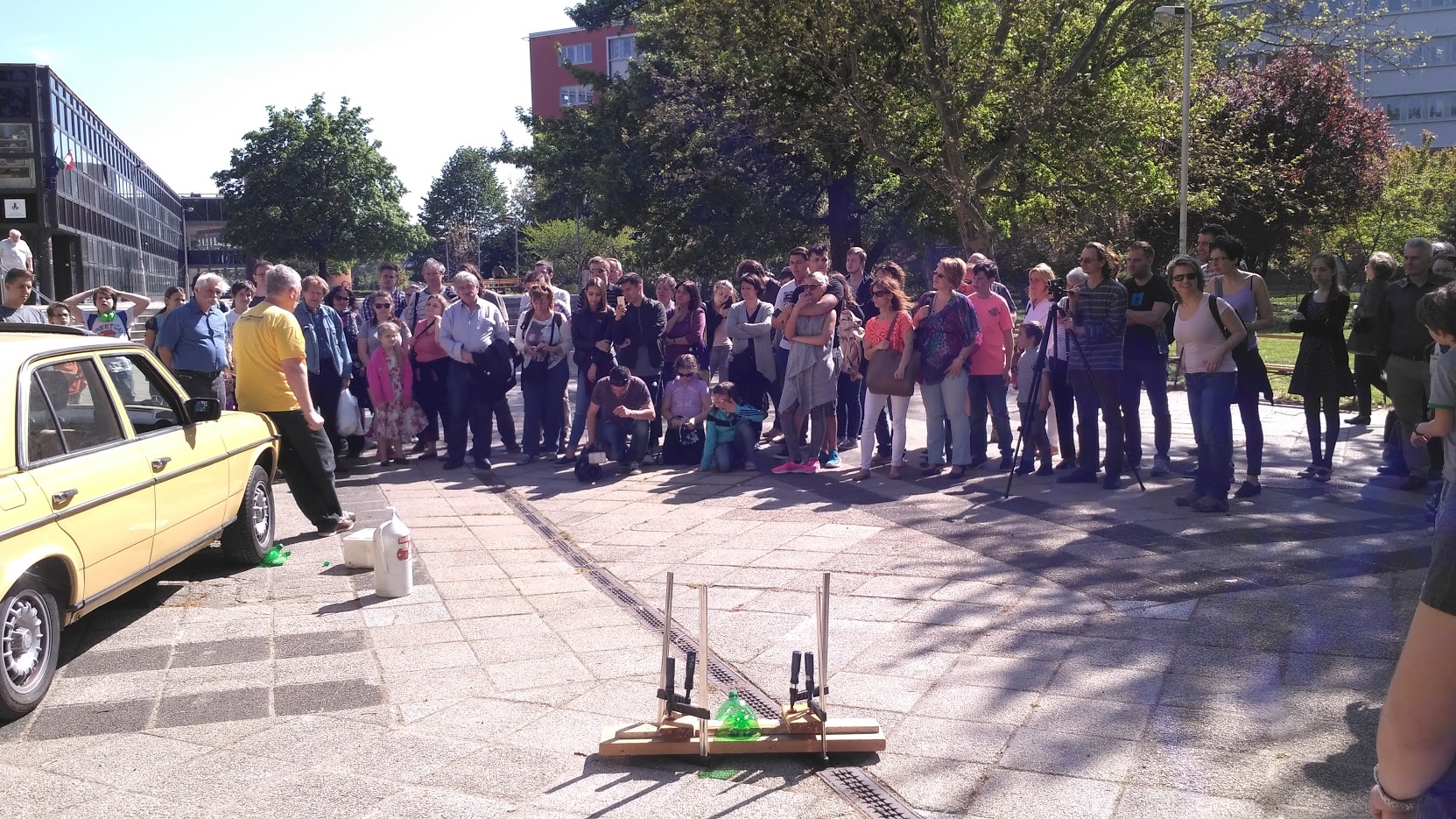
img_20160416_145008The main goal of the project was to raise public awareness to the everyday influence of physics in our life. Physics themed presentations were held in the whole country organised by the Hungarian EPS member ELFT, and we took our part in the project by organising the main flagship event at the Eötvös University. This was an open and free event for any curious persons, but our main focus was on families, teenagers and younger children. There were three 60 minute long easily understandable and entertaining scientific lectures. The lectures were presented by renewed scientists and students alike, with topics from the most novel and interesting research areas. During the whole afternoon and evening (for seven hours) there were four thematic demonstration stands with over a 100 different experiments (the four themes were: thermodynamics, electromagnetism, mechanics and fluid dynamics). The participants were also able to try out most of the non-dangerous experiments themselves. There were at least two presenters at each table, who were mostly physics students, and there will were additional organisers who have shown modern physics simulations and optical experiments at the lecture hall to small sized groups.There there was also an hourly rocket and explosion experiment in the open, and one of our guests lifted a car with PET bottles. We and the ELFT are happy to have organised this event a second time, and we hope to grow this national event to an international celebration for physics in the following years.

Videos and photos are available at: https://goo.gl/photos/Bh2VS11byUbBUZDp8
DOFFI Conference 2016

PrintWe have taken part in organising an annual Conference to hungarian PHD students.
The DOFFI Conference gave Physics PhD students from Hungary a chance to present their research and in return, gain an insight about the work being carried out by fellow students. Through a relaxed and friendly environment, it also gave attendees a chance to network with academics and students to create and strengthen professional relationships.
The four-day event was split into sessions which were chaired by top hungarian academics in the field. Student presenters of the sessions had the opportunity to receive feedback from an assigned discussant and the audience. The sessions were organised as the following:
A presenter gave a presentation of their own paper (10 minutes).
A discussant gave a short critical analysis of the presenter’s work (5 minutes).
All of the audience was given the opportunity to present their work in a poster. This took place during the whole of the conference.
The PHD students also participated in daily plenary lectures with current research topics (for example gravity waves or the dark photons).
Several physicist employing companies presented themselves to offer different jobs (e.g.Morgan Stanley).
We organised a forum discussions on issues affecting the physicist community.
We hope that the participant learned a lot, and got to know each other.

Webpage with abstracts, pictures and program:
http://doffi.elte.hu/

[nggallery id=101]

Naples PONYS section – YM BAA 2016

12977164_1063944126998939_7464643876718535501_oThe Young Minds Best Activities Award 2016 by EPL has been committed to the Naples PONYS section. The ceremony has been held during the 5th YM Leadership meeting in Budapest on the 16th of July.
In a competition between the 36 European sections, the Naples group has been distinguished by the activities carried out in the field of outreach, professional development and networking.

Physics Express

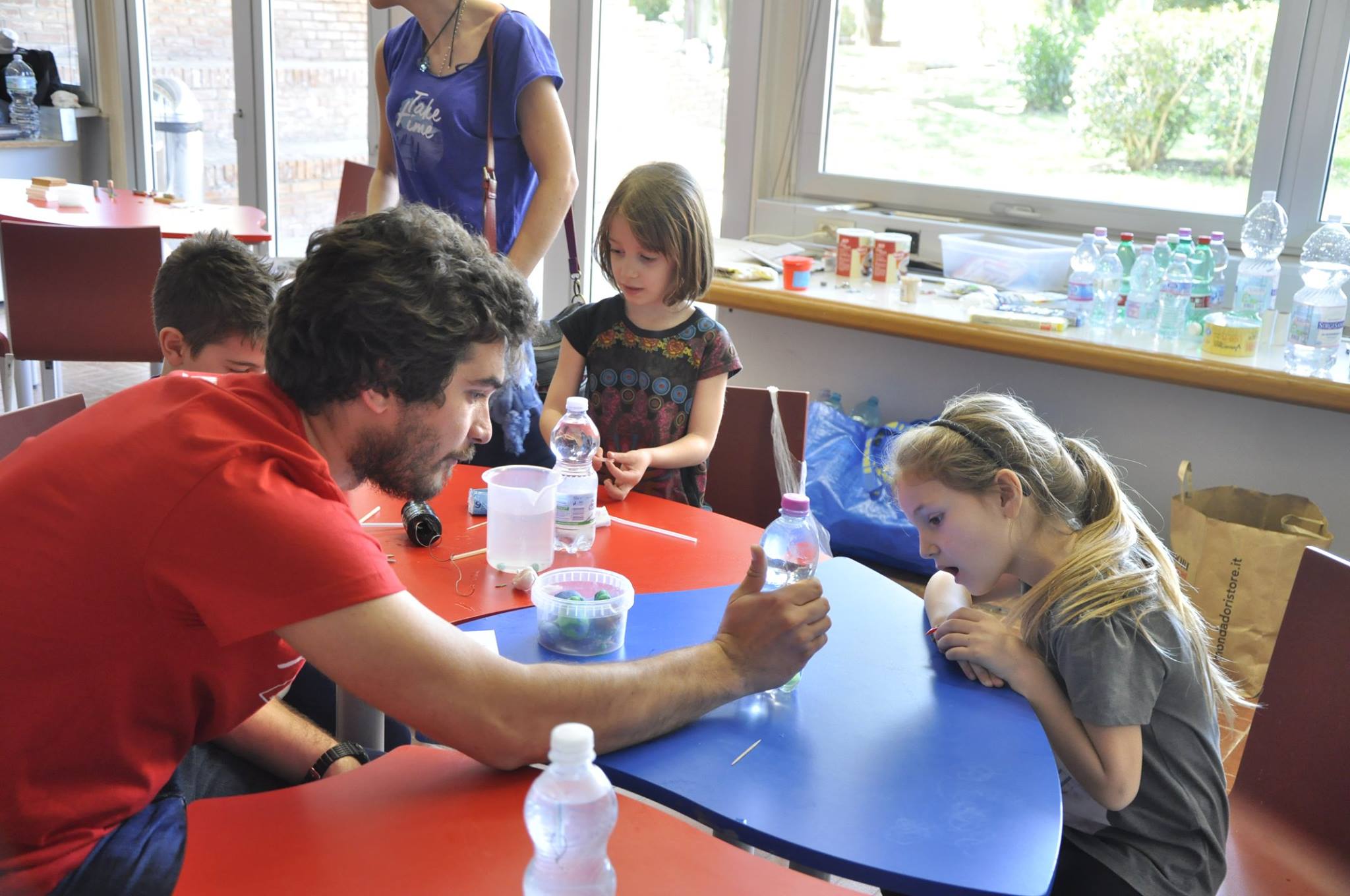
12977164_1063944126998939_7464643876718535501_oThis year on April 17th PONYS organized the fourth edition of “Passione Fisica” (“Physical Passion”, roughly translated) at Città della Scienza, the biggest science museum of southern Italy: an entire day dedicated to physics popularization through demonstrations and simple experiments. Supported by EPS and OSA and involving more than 100 volunteers among physics students of University of Naples “Federico II”, the event was targeted at both children and adults and designed as a journey through different fields of physics entitled “Physics Express”. Ranging from Electromagnetism and Optics to Thermodynamics and Particle Physics, most of the experiments were made of everyday materials, in order to both stimulate the audience with familiar stuff and to make those experiments easily reproducible and interactive. In particular, great importance was given to the hands-on aspect of the event, and in this perspective we proposed a new physics-based construction lab, where children were involved from the very beginning in the construction of simple toys based on physical principles. Such principles could be thus understood in a very practical, funny and powerful way, and eventually children could obviously keep the toy they built as a souvenir of the day. “Passione Fisica” was also the occasion to spread among the large public the award-winning documentaries of the European Science TV and New Media Awards 2015, which were showed in a hall for the whole duration of the event, and to celebrate the OSA Centennial with a dedicated desk.
Alongside our activities, Città della Scienza organized during the day other demonstrations and talks in partnership with local associations and research centers, which presented some of the hottest topics of their work. According to the museum ticket-selling office, more than 800 people joined us for the event.

[nggallery id=85]

Physics is Back

fotoIn order to enrich the orientation programme offered by our department for master students, PONYS members proposed and organized a series of talks meant to underline of a physicist can work and excel outside the research world.
During 2015-2016 academic year, PONYS members organized a series of seminars about the possibilities, for a physicist, to begin an alternative career along the research one.
This meetings were held at the physics department of University of Naples Federico II.
Lecturers were chosen among those who decided to start a career far from the “research world”. Indeed, we invited former physics students of our department that now have job positions outside universities and research centers. We wanted to know and to focus the conversation on how a “physical backgroung” could be used outside the academia. All the students of our department were warmly invited to join the seminars and to take part with their curiosity and questions.
Our speakers were:

  • Emilio Sassone Corsi, Senior Partner & CEO Management Innovation, 12th February 2016. His speech was entitled “From Physics to innovation management and back.”
  • Marco Valli, data scientist at Pangea Formazione, 30th March 2016 whose talk was entitled “from Physics to the industrial world and back.”

This two meetings were attended by an average of twenty people between PhD and master students in physics.
Each meating was closed with a light buffet, ment to thank our guest and to enjoy some time with the parecipants. This coffe breaks were a good occasion for us to present and talk about our past activities and future projects!

[nggallery id=84]

Young Minds at Napoli COMICON

Physics4ComicsThis year Naples PONYS chapter participated at the Naples COMICON, held at the Mostra D’Oltremare from the 22nd to the 25th of April. This is one of the most important conventions in Italy about comics, cosplaying, gaming and other related activities, and attracts more than 100.000 visitors each year. None of those 100.000 expected to find there, alongside cosplayers, publishers and famous authors also a bunch of physicists, lots of interactive experiments, and a board game on quantum mechanics! These were, in fact, some of the key features of the “Physics4Comics” project. Its aim was to spread scientific knowledge and concepts contextualizing them into the atmosphere of a comic-convention, riding the tide of the sense of wonder arisen by such festivals in order to awaken curiosity in an audience composed mostly by teen agers and young adults. The event consisted in:

  • Interactive physics experiments, mostly realized with everyday materials, talking about the physics lying behind the fantasy. Their aim was to show how many strange effects are present not only in comics or movies, but also in our world, and how physics can help to notice and explain them;
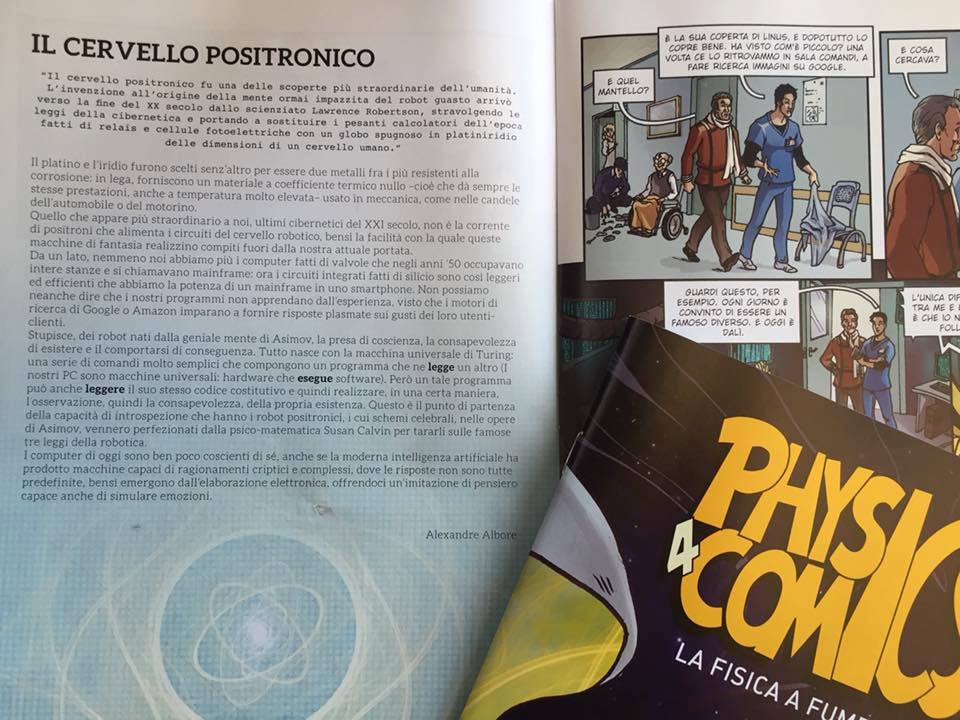
  • A comic book, realized by our members in collaboration with INFN, in which a comic story serves as a narrative link for a set of six articles, written by researchers, PhD and master students in physics. Each article tries to explain how the most famous phenomenon in popular culture (e.g. Superpowers, Teleport , Lightsaber) could work using physics, under the condition of “stretching ” a little bit its law (we are always talking about flying guys). The Comic book was distributed for free in 3500 copies during the event and more copies are on the way!
  • Quantum Race, a board game developed by the CNR – IFN Researcher Dr Fabio Chiarello which uses quantum mechanics effects and phenomena as game rules. In this way players are more likely to accept and understand concepts far beyond the “common sense”, because they are framed into a ludic structure that forms suspension of disbelief. The game was also present in a huge version which allowed players to play at open air!
    Alongside these events, the Napoli COMICON organization hosted three small talks in which our members were given the opportunity to speak about the various features of the events.

The event was a success thanks to efforts of more than 20 volunteers (among researchers, PhD, master and bachelor students in physics) which faced hordes of thousands curious participants.

[nggallery id=83]

Young Minds at Portici Science Cafè

PorticiScience Café is a public science initiative started in United Kingdom, but currently running all over the word. Typically, one monthly evening meeting is organised in a café or bar to which one or several scientists are invited to talk in laymen’s terms about their work in a topical or even controversial area. The events are known for their informal and friendly atmosphere, and are believed to improve the image of scientists and careers in science.
In Portici Ing.Vincenzo Bonadies started to plan a series of talks with young napolitan researcher that were gladly invited to present their current work.
In particular, we were attracthed by the location of the event, Villa FERDANDEZ, an old mansion recently confiscated to local crime organizations.
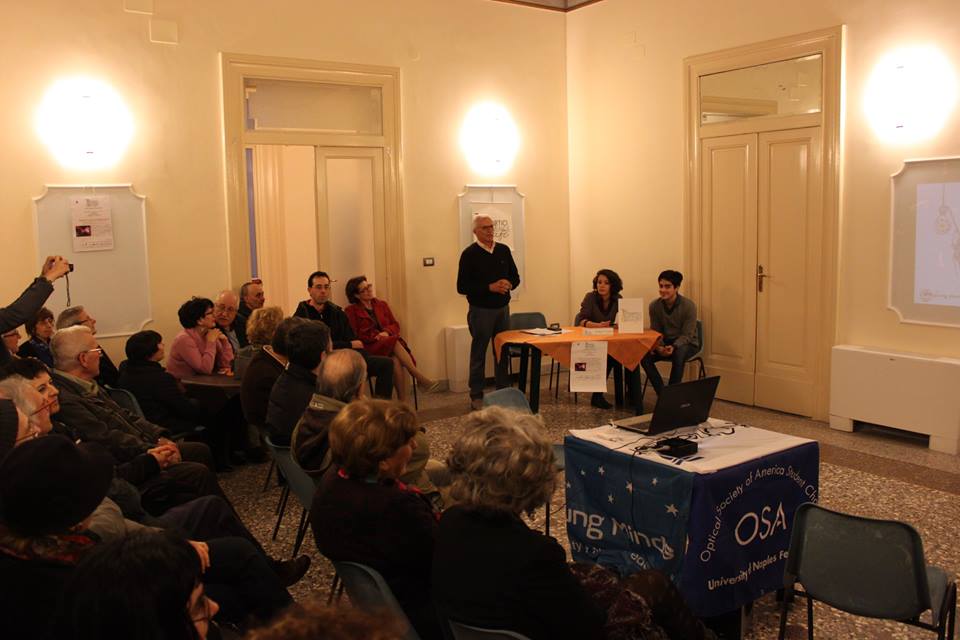
On February 17th the Portici Science Café invited Michela Florinda Picardi, a PONYS member, to give a speech on light for the International Year of Light. Michela, former president of our OSA Student Chapter, is now a PhD student at King’s College in London.
She worked on the orbital angular moment of light, and on the possibility to use it as another degree of freedom for quantum computing. Her talk showed to the common public how light is nowadays in our daily lives, and how the development of new technologies in quantum optics can enlarge this use.
During the event Lorenzo Colaizzi, showed the PONYS activities to the Science Café participant. The short movie Blackout, directed by Michela with the help of all the association members was projected for the first time in Italy. In conclusion simple experiments on light had been shown to the public. It was an amazing afternoon for us. Our first Science Café, and hopefully just the first one!
Around 50 people attended to the talk, and an entire classroom from the local highschool was involved into the experiments-realization by our members.

Conference “Developments in Optics and Communications 2016”

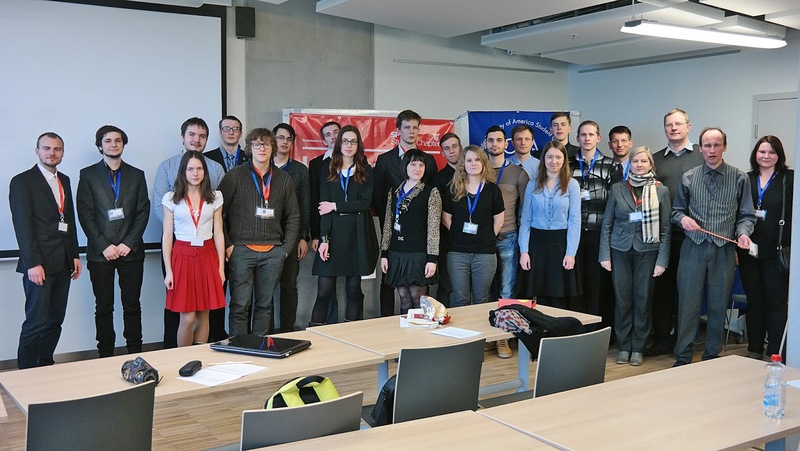
1imgA little earlier than usual – just before Easter -, from the 21st to 23rd of March, the 12th International student and young scientist conference “Developments in Optics and Communications 2016” (DOC 2016) was held in Riga. It gathered many brilliant young scientists from different countries to share their scientific work, insights and experiences in various fields related to optics: vision science, optical materials, biophotonics, laser physics and spectroscopy.

Each topic also featured an invited speaker that shared their experience with the young scientists. This year from Latvia – Dr. Mara Reinfelde talked about “Practical application of holography” for the Laser Physics and Spectroscopy section, University of Latvia OSA student chapter advisor Dr. Florian Gahbauer gave an amazing speech on the topic of “Magnetic sensing with nitrogen-vacancy (NV) centres in synthetic diamond”. The conference organizers had also invited speakers from Israel and Finland to talk about their research.

Dr. Igor Meglinski was invited to tell students about “Cloud Monte Carlo for the needs of biomedical optics” for the biophotonics section and Prof. Zeev Zalevsky from Israel gave a speech about “Super resolved and extended depth of focus concepts for remote and ophthalmic imaging systems” for vision science students. Students were so engaged in Prof. Zalevsky’s speech that it took almost an extra 20 minutes just to answer all the questions and give in-depth explanations of his work.

Traditionally the best poster and the best oral presentation are given an award for their work funded by University of Latvia OSA student chapter, and this year was no exception. The best speech award was given to Janis Smits for his talk “Deconvolution – a tool for enhanced resolution magnetic images” and the best poster was presented by Andris Antuzevics (“Structure of Gd3+ ions in oxyfluoride glass ceramics containing fluorite crystallites”).

This year was special also because of the conference venue. The conference was held in the newly built Academic Center for Natural Sciences of the University of Latvia (ULACNS) in Tornakalns. ULACNS opened its doors on September 7th, 2015. It was hoped that relocating to the new UL ACNS would create unprecedented opportunities for cooperation between scientific fields and study programs. And indeed it was an amazing experience to listen to talks and admire posters in the new building. The premises on the 7th floor provided an amazing view over Riga for every attendee to enjoy. The staff were also kind enough to allow conference guests to enjoy the view from the rooftop.

The conference was not only an event to present one’s work and listen to others, but also a way to meet fellow physicists in an informal environment. Since the best collaboration ideas are usually born while discussing various topics outside the conference rooms, this year a friendly paint-ball tournament for the conference participants was held.

The conference was organised alongside University of Latvia SPIE and OSA chapters.

[nggallery id=81]

Regional School for Young Physicists

1The School for Young Physicists project that our Young Minds section organizes not only held monthly sessions in the capital of our country this season, but also held regular sessions in other regions as well. Namely, this season we visited schools in Valmiera, Kuldīga and Ventspils.

Regional sessions take place two or three times a semester in each location. Students from surrounding schools are given the chance to attend a free lecture course – usually session topics that have already been tested in our main events are chosen, but sometimes they get a premier look at a new topic that has not yet been presented anywhere else.

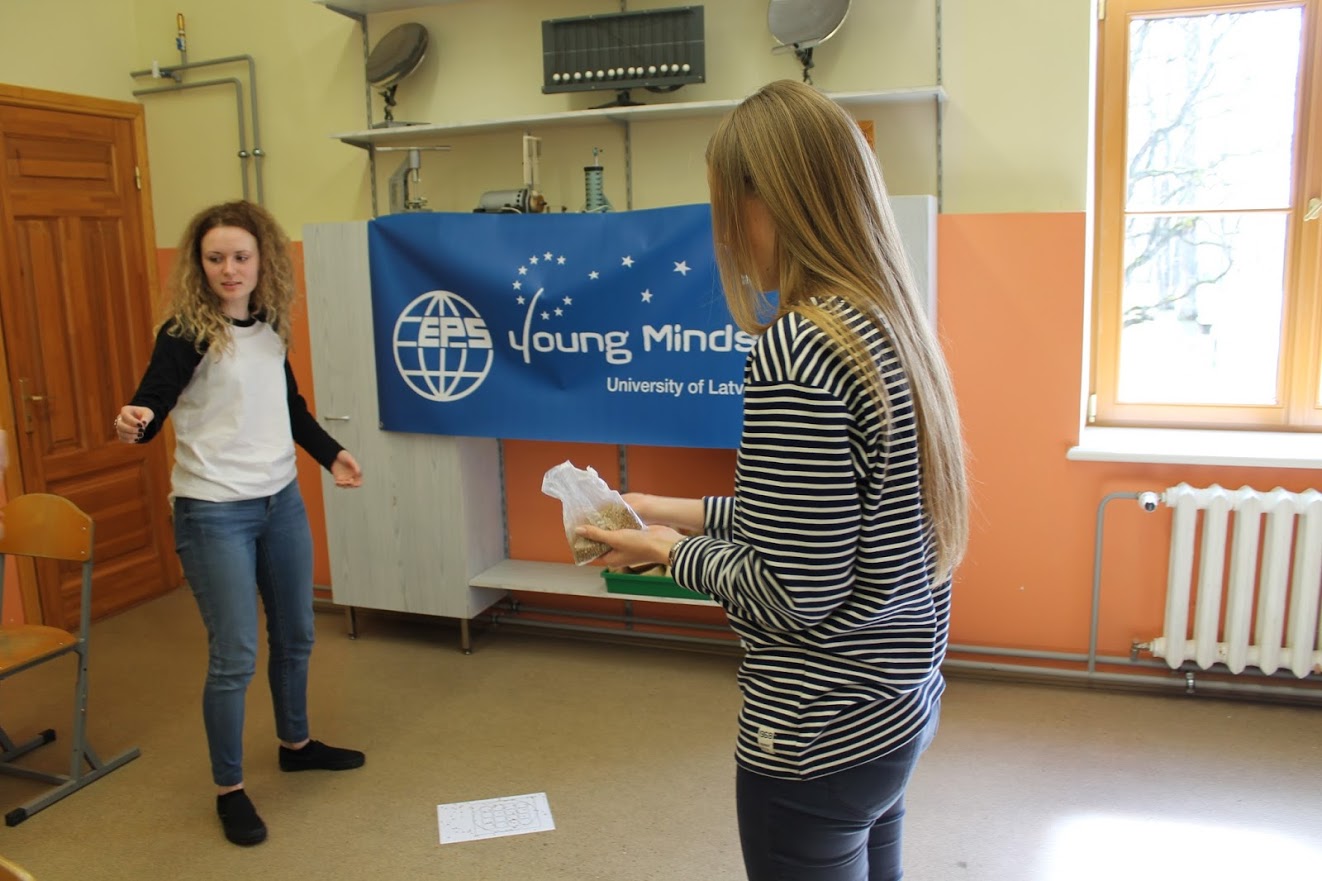
Topics discussed this season in regional sessions include, but are not limited to, probability in physics, electronics and wave optics. Students had the opportunity to conduct experiments normally not done in schools – for example, they determined the distance between the pixels in their own smartphones, or calculated the value of pi by dropping buckwheat on a piece of paper.

These regional sessions are educating not only for the students attending – teachers also find inspiration in these non-standard topics and experiments, and materials for use in lessons are often left at schools that are visited for the teachers to use free of charge.

Our Young Minds section views these regional sessions as valuable opportunities for children that live far away from the capital to get a chance for extra curricular informal learning, so we will give our best efforts to expand in this direction next season.

[nggallery id=80]

6th season of School for Young Physicists

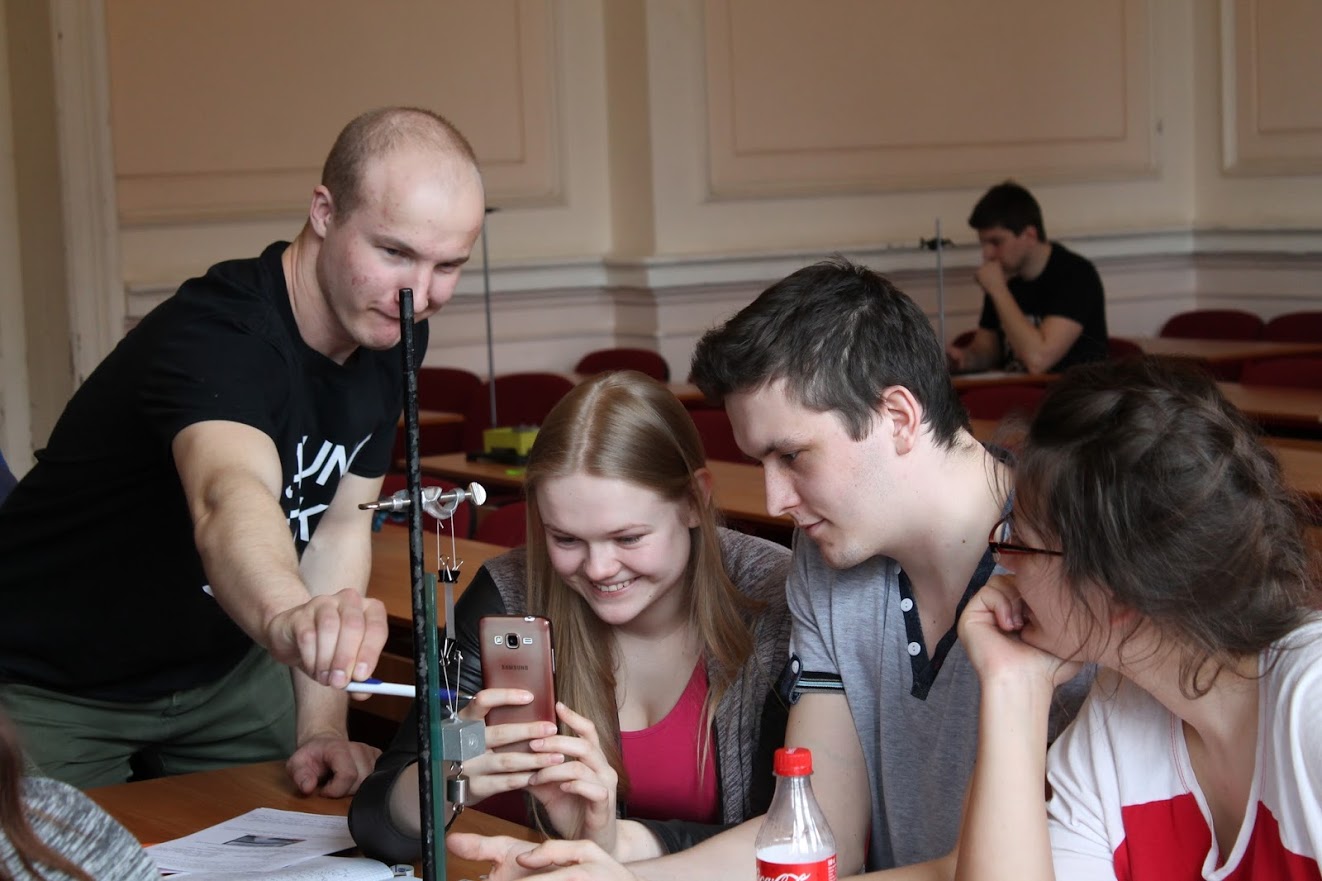
2Along with the school year, the School for Young Physicists has finished its season as well. Nine different, fun and educational sessions took place in the University of Latvia Faculty of Physics and Mathematics on the following topics:

-forensic physics
-energetics
-biological physics
-optics
-centripetal force
-electronics
-statistical physics
-liquid physics
-elementary particle physics

Each session was attended by an average of 150 students from different schools of Latvia who arrived to listen to popular science lectures from physics students, conduct some fun experiments and learn from the very best in lectures given by professors and specialists of the field.

A season-long competition was also held – the School Cup. To contend for it, students were tested on their knowledge after every session and also had to make videos of different topics as homework. Their work was graded after every session and a scoreboard was kept and regularly updated. The competition was tough but in the end the first place was awarded to the Riga State 1st Gymnasium team “Nucleus and Electrons”. The top teams and individual performers were awarded with gifts from our supporters.

The team of School for Young physicists also visited the best regional schools in Latvia for external sessions. We visited Valmiera State Gymnasium, Ventspils 1st State Gynmnasium and Kuldīga Gymnasium, thus offering the children to attend the sessions without having the need to travel the long distance to Riga. You can read more about it here.

All the materials and reviews can be found at www.jfs.lv

[nggallery id=79]