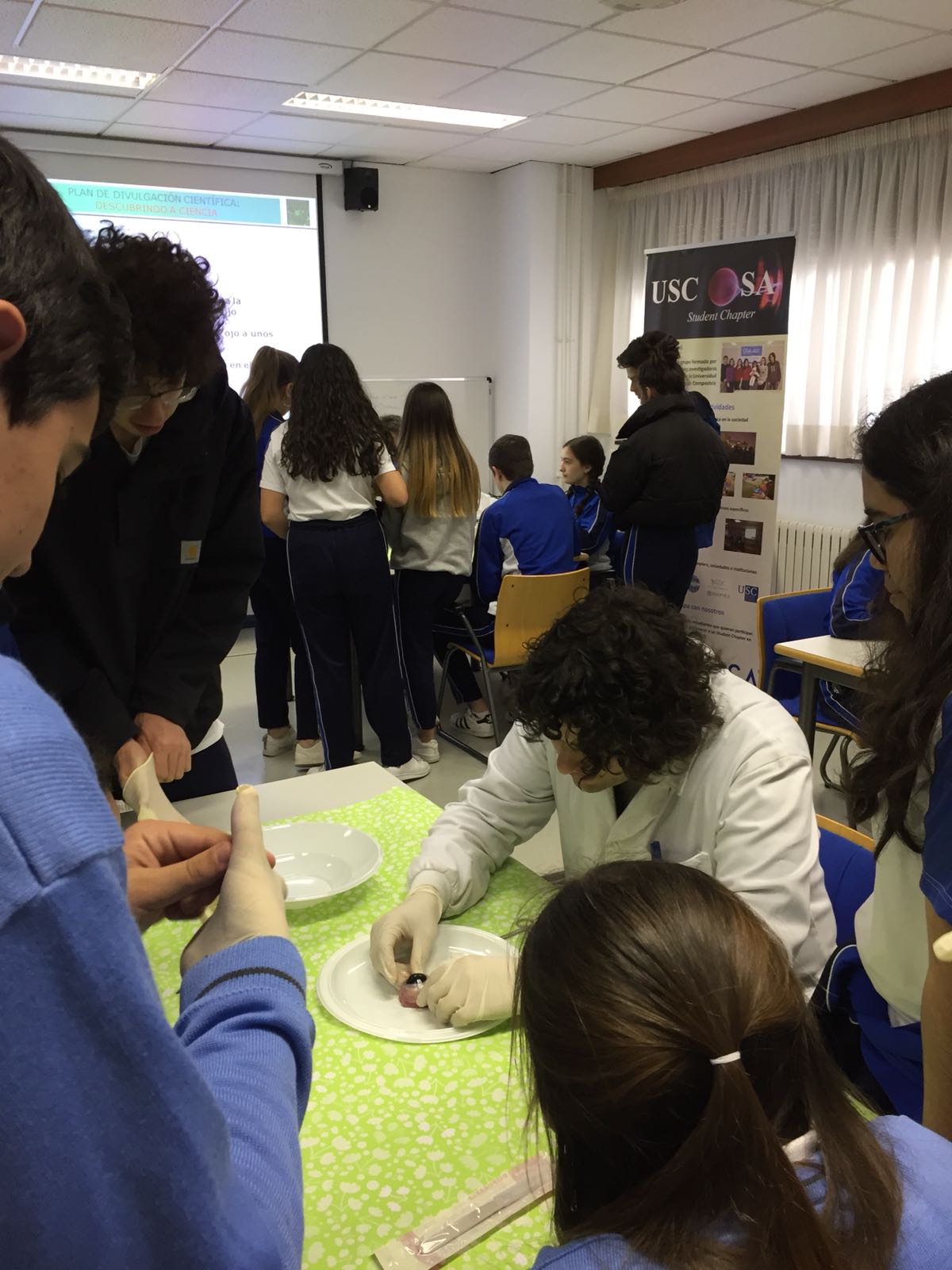
Unfortunately during this year the Young Minds Section did not have any outreach activity with students in our Headquarters. Therefore we are not able to use the Human-Size camera obscura. However, we build different portable size camera obscura and we brougth it to our outreach activities in the schools. Next year we plan to be part of the science week organized by the University, in this case we are sure we can use the human-size camera obscura.
Regardless the problem to do this activity, the group made an effort to bring students a fresh vision about optics in different school activities, bringing brand new activities like dissecting cow eyes in order to show how an eye works and its parts. Moreover the group is concerned about the important of the gender equality, for this reason we continue collaborating with the city council in an activity called: “A woman scientist in each school” that is its third edition and has a big impact and good acceptance among teachers and students.
Moreover the group is concerned with the professional development of its members and the surrounding scientific community of the University of Santiago de Compostela, for this reason the group has organized several conferences and lectures this year about different topics in optics. In January we brought professor Pieter de Beule from the International Iberian Nanotechnology Laboratory from Braga, Portugal, with the talk: Overview Research Activities Applied Nano-Optics Team. In March, Raul Rangel from CICESE (Mexico) made a conference called: Nano Structured materials for nonlinear optics and wave guiding devices. Finally, in July we brought Prof. Virendra Mahajan from the College of Optical Science with the talk entitled: Axial Irradiance of a focused beam.
Lunch lecture with Swedish Young Minds
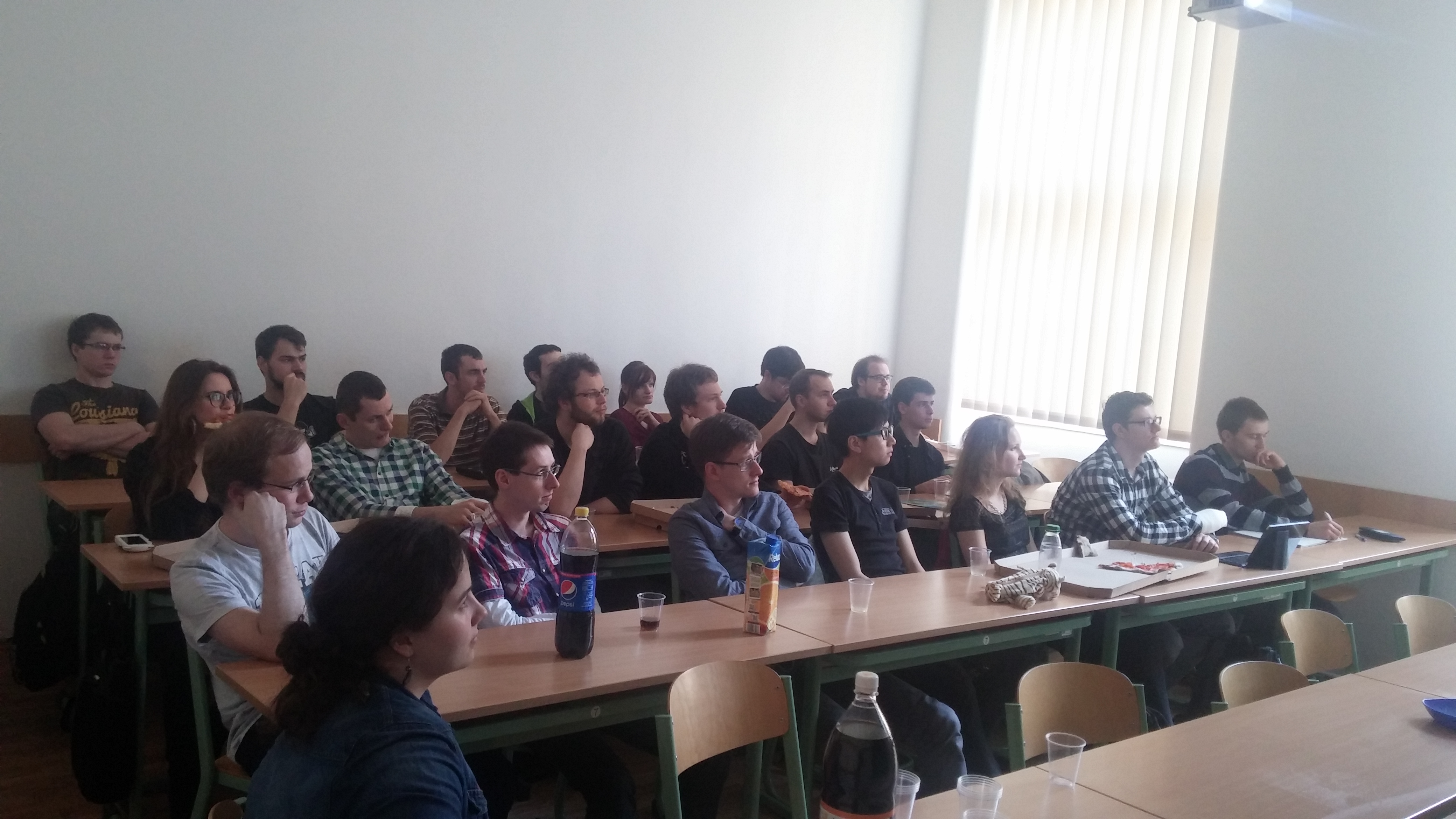
The activity was a lunch lecture about gravitational waves held by professor Ulf Gran, with partial aim to promote the Swedish Young Minds section and gain more members. The lecture was held at Chalmers University of Technology (CUT) in Gothenburg on the 20th of April in connection to one of the board’s planning meetings for the Lise Meitner-days event, our annual activity weekend for high school students from all over the country, which is currently the main activity of our section. In that way, all members of the board could be present. Our section was founded very recently so gaining publicity and members are currently our main goals. Providing lunch and an interesting lecture is known to be a successful way to gain publicity that other organisations do from time to time at CUT, and the number of attendants and the response we got indicated that this event was successful as well.
Before the lecture advertisement was made by putting up posters in the physics department building and a few other places, by giving announcements in lecture breaks and by sharing a facebook-event. This turned out to give sufficient publicity to attract more people than the 100 lunches we provided.
We (the board) started with presenting ourselves, the Swedish Young Minds section, what kind of activities we are planning to arrange in the future and why the attendants should become members. For the rest of the lecture we invited professor Ulf Gran to talk about gravitational waves. Professor Gran is known to be a very popular lecturer from the first course in mechanics at the Engineering Physics and Engineering Mathematics programmes, where most of the attendants study. He has also been awarded several pedagogical prices from CUT and was therefore considered a very suitable choice of lecturer.
The lecturer involved a description of the basic concepts concerning gravitational waves and the experiments made to detect them, many illustrating animations and a live demonstration of an interferometer to illustrate the operation principles of the LIGO detector. There were quite a lot of questions both during the lecture and afterwards, and the overall reaction showed that the attendants thought the lecture was very interesting.
The 100 first attendants, which was also the actual number who participated, were provided half a pizza and a soft drink. Providing pizza for lunch was considered a good option with costs comparable to or even less than other common alternatives such as salads or baguettes, and we also believe it was much more appreciated. We also got a small price reduction from where we bought the pizzas (0.5 euro/pizza). After the lecture we handed out a note with instructions for how to become a member, and a few students also stayed and talked both to professor Gran about the lecture and to us about the future plans for our section.
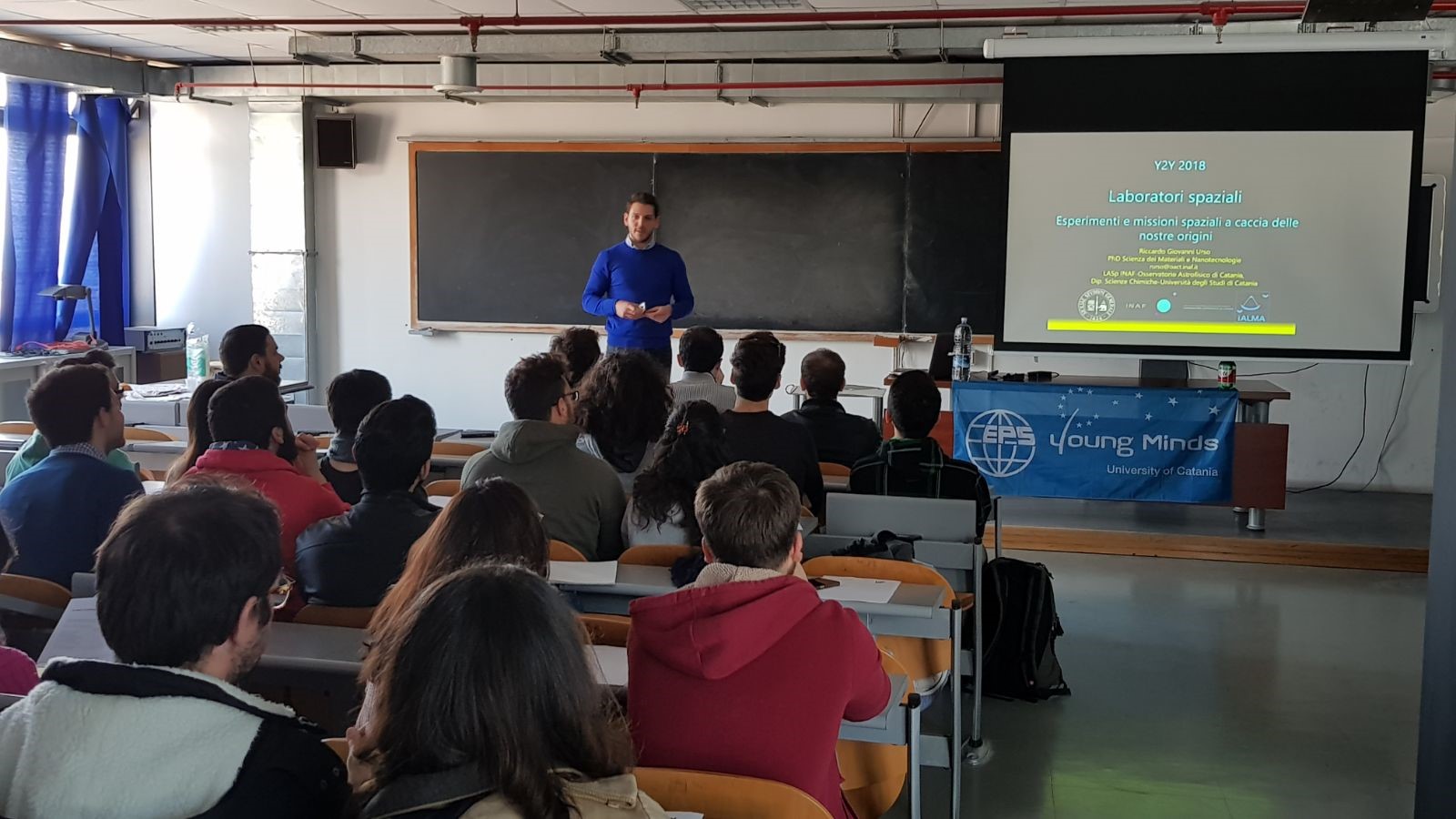
YtY – Space laboratories: space experiments and missions to find our origin.
Students choose university courses mostly upon what they like, but rarely they know what truly means working in a particular area. This is true both for research and industry. There are informative initiatives, but we realised that students want to know about the decision progress older collegues have taken, maybe only a couple of year before them. Then, we organize “Young to Young” (Y2Y) meetings in order to let young speakers tell young students why they decided to start a PhD or to be enrolled by a company or which was their thesis project, presenting their whole experience.
The first Y2Y meeting was presented by Dr. Riccardo Giovanni Urso, graduated at the University of Catania in Science Materials and Nanotechnology. He focused on the fact that his research project concerned the formation of materials in space that led to the origin of life, an interdisciplinary path that gave him the right enthusiasm. He described his work, his results and how he learned from all people he came in contact. At the end, there was time dedicated to questions by students.
Undergraduate students and early master’s students were the target of this meeting. We were able to attract an audience of about 30 people.
We asked all participants to fill a survey. Feedbacks are clear: they appreciated this initiative and all of them will participate next meetings. They also appreciated the fact that a young person was spoke to them. Finally, we need to improve the advertising to reach more students and attract them.
Student Meeting: “Famelab Catania 2018”
Famelab is a science communication competition with the aim of entertain by talking science. Since its launch in 2005 in Cheltenham (UK) Famelab has become the world’s biggest communication contest for scientists, and today the event includes more than thirty countries. This challenge is open to young researchers, university students and anyone involved in science who loves talking about a scientific topic in an effective way. In fact, the competitors have only three minutes to tell the object of their research activity or a fascinating scientific topic to a heterogeneous public (researchers, university and high-school students, families…), only with the help of their communication skills and small objects of everyday life. In each local contest, the “famelabers” are judged by a selected jury (scientists, communicators, journalists…). The jury choose the two winners who will participate to the “masterclass”, a three-days training event with professional science communicator, and then to the national and, eventually, international competition.
Since 2017 Catania is one of the italian selection sites for Famelab, and for the second year EPS Young Minds team has been directly involved in the organization of the event as major sponsor, providing also technical support services. In particular, based on the big success of the 2017 edition in terms of participants and feedbacks from the public, in 2018 the YM section proposed a new three-days format for the local event: two semi-finals and the final contest. In each day, the YM section and invited a high-profile scientist to be part of the jury, and to do a seminar about frontier research topics at the end of contest. The three invited high-level scientists were:
- Barbara Mazzolai, Director of the Center for Micro-BioRobotics of the IIT (Istituto Italiano di Tecnologia), who talked about bioinspired robotics and the future of robotics.
- Luigi Cattivelli, Director of the Genomics Research Center of the Agrigultural Research Council, who presented his research activity on genetics and molecular biology of cereals.
- Eugenio Coccia, Rector of the Gran Sasso Science Institute and one of the authors of the discovery gravitational waves and of the first observation of black holes, who talked about the born of a new astronomy with gravitational waves.
At the beginning and at the end of the three presentations, the speakers did not lose the opportunity to acknowledge the YM section and in general the YM philosophy. A great participation of scientists and students was appreciated not only during the contest but also during the presentations, and there were also strong interactions with the three speakers, moderated and catalysed by the YM members.
Scientific research around us: “Printed Nano-particles Based Bio Sensors”
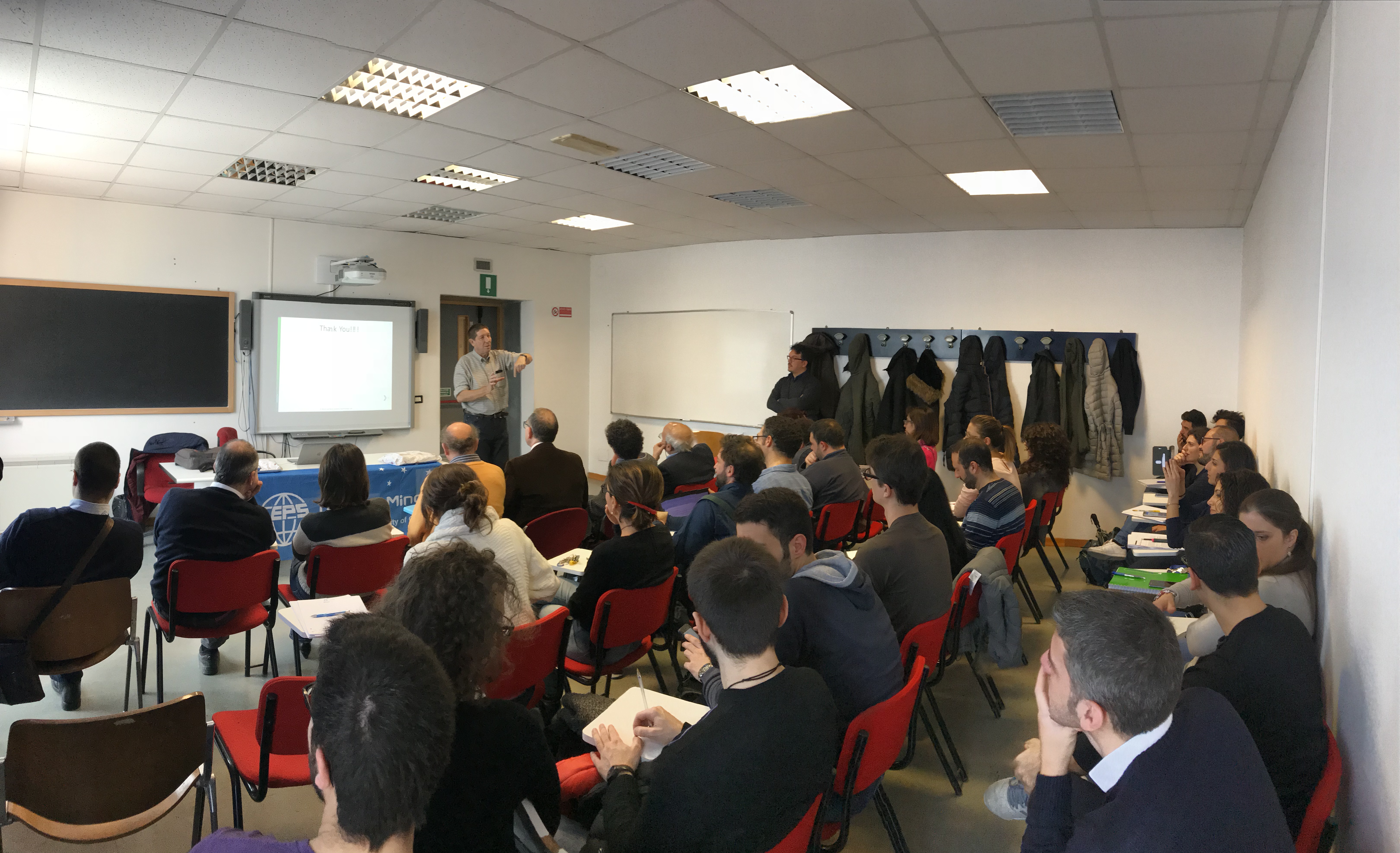
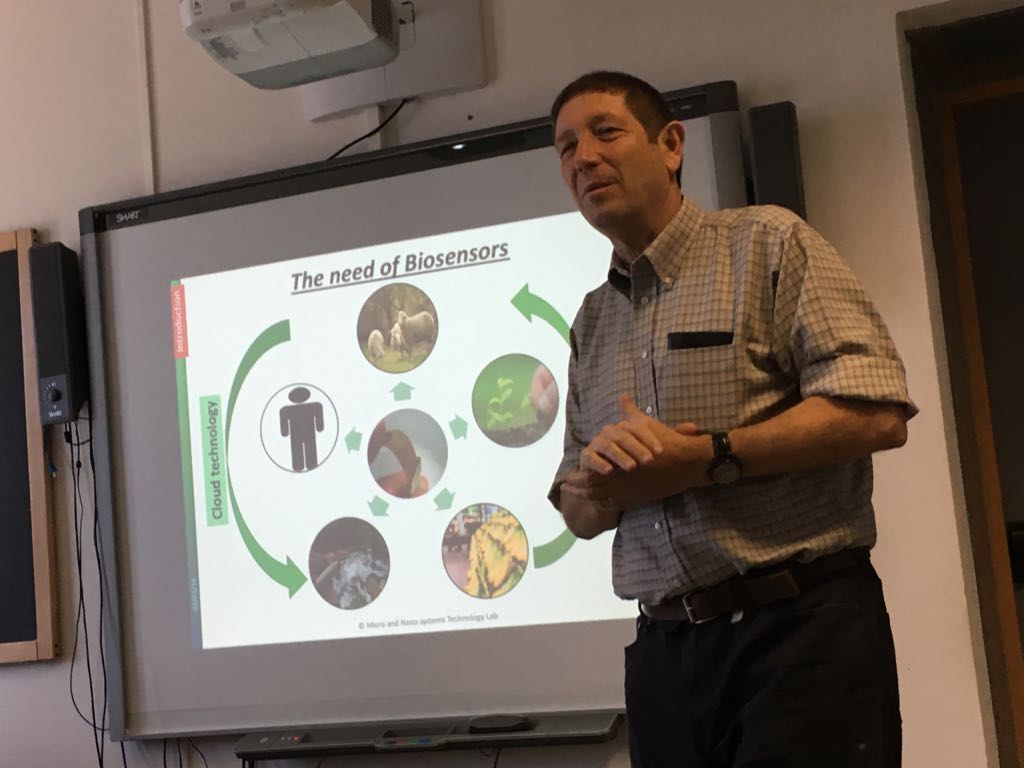
Sensors are nowadays in everything, always smaller, efficient and interconnected. In our smartphones are irreplaceable tools for the interaction with the touchscreen and for the gesture (i.e. gyroscope, accelerometer etc) as well as for the health monitoring and the interaction with the environment (i.e. hearth rate monitoring, compass, barometer, GPS etc). In the next future, their number will increase exponentially to guarantee new service and security application. Indeed, sensors permit us to understand, monitoring and interact with the environment around us. In these last years, there was an exponential growth of the research about the bio sensoristic with innovative sensing platform based on nanostructures thanks to their innovative properties and the very high surface to volume ratio with respect to bulk materials. In this seminar, the importance of very cheap and interconnected sensors was enfatized also for the smart agricolture in poor country to fight against the scarsely food production. Prof. Shacham is one of the most global experts in this field and proposed an innovative technique to realize very cheap printed sensors based on metal nanoparticles by using special ink in common optimized printers. In this way, the estimate cost amount in large industrial production of these sensors is so cheap to be competitive in third world country agricultures showing new opportunity against the world hunger. The sensors showed are mostly Enzymatic and was exploited in the medical field (i.e. glucose sensing) as well as in environmental monitoring for smart agriculture (i.e. monitoring of plant conditions by the protein expression).
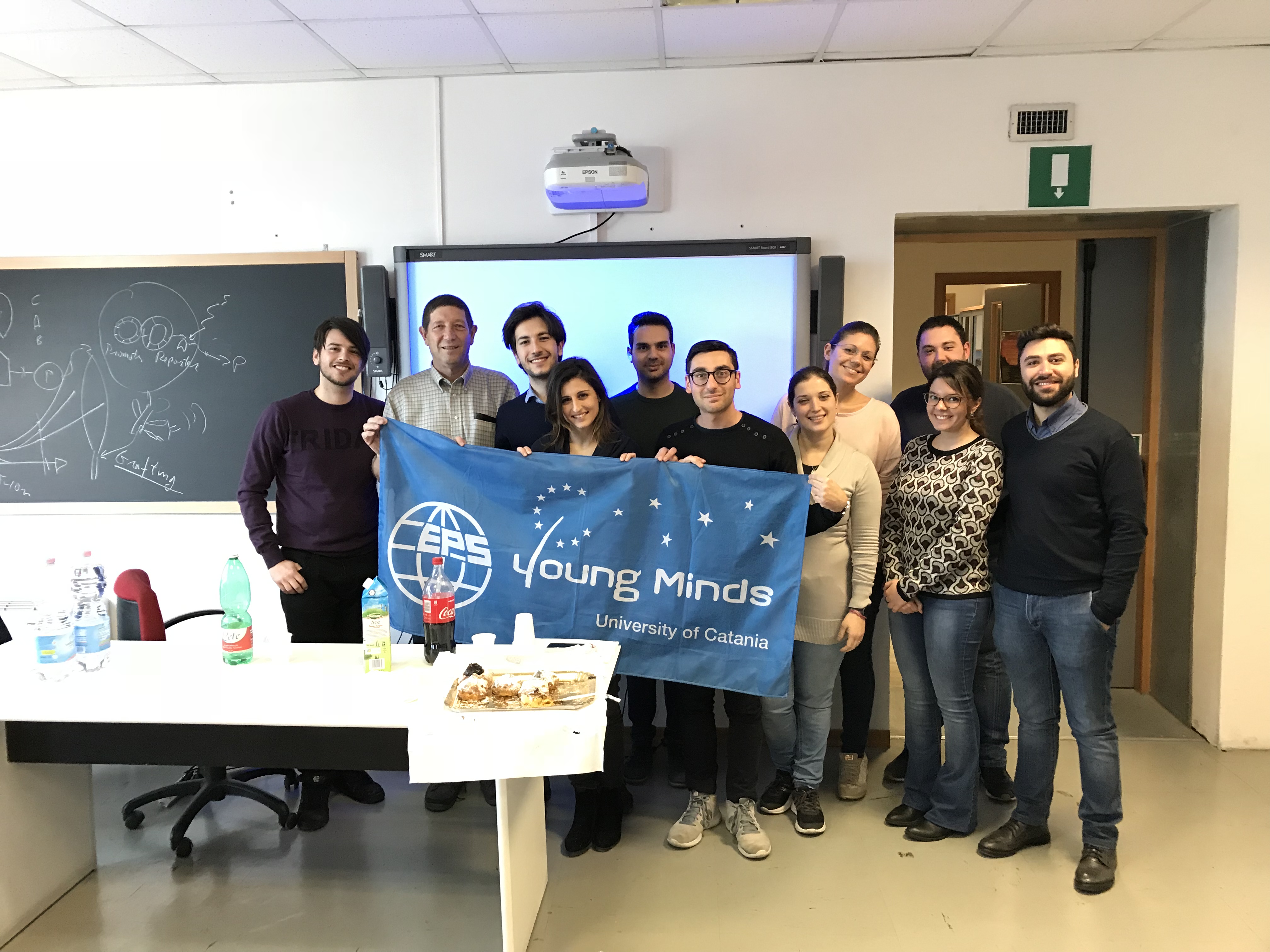
Prof. Shacham has treated with meticulous clarity different topic from screen printing of nanoparticles to biophysics and the functionalization of different material for sensors with a very intressing vision of the next future of the sensors. Finally, Prof. Shacham did not lose the opportunity to acknowledge our YM Section and the general YM philosophy, inviting interessed students and researchers to think to the opportunity to apply for an experience in his laboratories. The primary target of this seminars was mostly graduated and Ph.D. students with the appreciated participation of the undergraduate student, researchers and department professors and we obtain an odience of about 40 people.
In order to have the possibility to host a high-profile scientist, we organize this seminar join in the collaboration of the University of Catania and the University of Palermo about their project of the
inter university Ph.D. in Nanomaterial Science.
After the end of the scientific discussions, further informal scientific interactions were catalyzed by a convivial environment and the students had also the opportunity to interact directly with Prof. Shacham and discover different interessing suggestion about the next future of the sensoristic field by one of the
most recognized scientific expert.
Physics League’s activities 2017
‘The Sound of Physics’ show has been brought on stage several times over the year. It has been used to present properties of waves, such as frequency, amplitude, and even an introduction to harmonics, to general public. The community has reacted well to this initiative, granting us a good amount of audience in each performance and positive feedback after it. The first show of the year took place at the high school ‘La Salle’ in Palencia for 200 hundred students on January 27th. Also, an adapted version of the show was performed during the international event ‘Pint of Science’ (May 15-17th) for a total audience of 380 people at the bar ‘Pigiama’ in Valladolid. Moreover, this show was selected to participate in the finals of the international contest ‘Ciencia en Acción 2017 on October 7-8th, where 1000 people could enjoy an adapted workshop.
The workshop ‘Game of Physics’ has always been one of the signature initiatives of this section. Like several years before, this show covers a huge spectrum of the whole Physics, and new experiments are being constantly added to it to enrich the experience. Numerous schools keep signing up to participate in this activity, which has been organized three times along the year. Firstly, on April 20-21th, during the University of Valladolid ‘open doors week’ for 200 high school students. Secondly, on September 29th at the Valladolid Science Museum for the European Researchers Night with 600 visitors and impact on regional TV. Finally, on November 13th during the Science Week with 200 high school students.
As the previous year, ‘Scary Physics’ was carried out at the medieval Castle in Portillo. The script has been rewritten and renewed for this amazing theatre. It had also to be readapted to fit open air and light conditions, at the sunset and night, including new experiments. The two performances gathered 200 attendants, who gave us a great feedback.
The workshops ‘Movie Physics’ were carried out on June 24th for the National Mathematics Olympiad. 65 students participated and observed some real-life special effects and the physical phenomena that make them possible.
‘Superpoderes… ¿o física?’ (‘The Power of Physics’) was performed on October 5th at the ‘University day’ of University of Valladolid. It took place at the Main Square of Valladolid for 100 people. The audience could learn how to use several physical principles to emulate seemingly inhuman feats.
The elementary school ‘Miguel Hernández’ welcomed the workshop ‘A Pirates’ World’ on June 15th for 200 elementary students. They dealt with some basic physical concepts with some simple explanations in an animated context.
Aside from this, the association has also organized workshops with some selected interactive experiments for the following institutions (audience: 90 people): ‘Universidad Permanente Millán Santos’, ‘Scouts’, and ‘Aspaym’ (association of disabled people).
To finish the year, one more performance of ‘Superpoderes… ¿o física?’ is planned for December 27th in Herrera de Pisuerga.
2017 IEEE International Young Scientists Forum on Applied Physics and Engineering (YSF-2017)
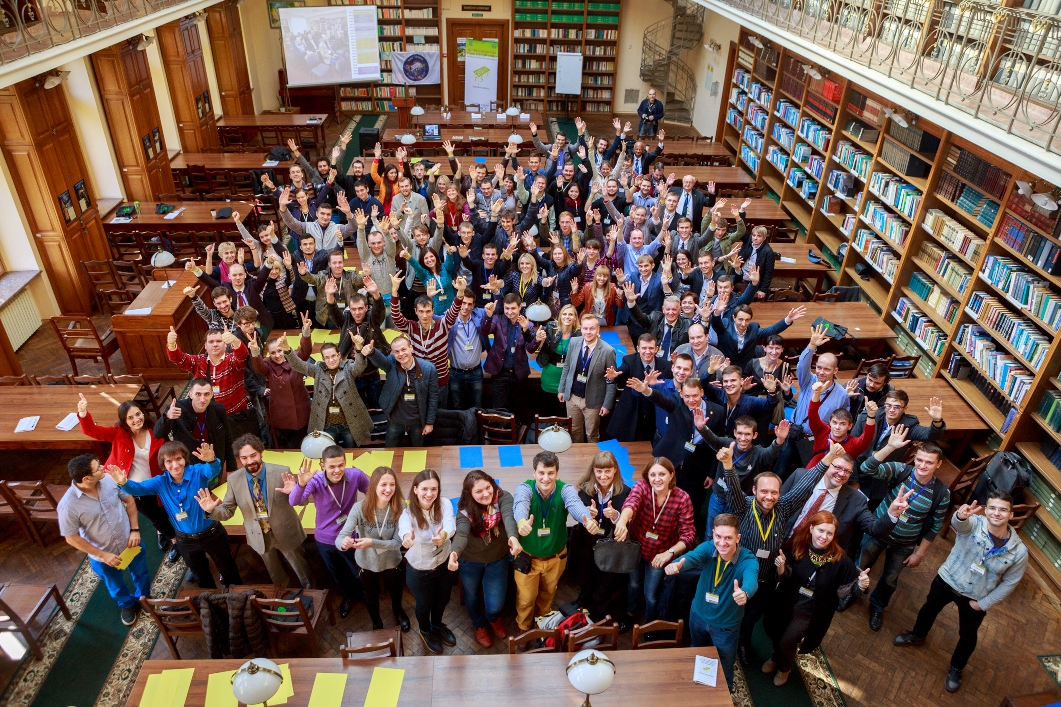
The 2017 IEEE International Young Scientists Forum on Applied Physics and Engineering (YSF-2017) was successfully held on October 17-20, 2017 in one of the most beautiful cities of Ukraine, in magnificent Lviv. The event was hosted by the Scientific Library of Ivan Franko National University of Lviv.
The event was co-organized by the O.Ya. Usikov Institute for Radiophysics and Electronics NAS of Ukraine and its Young Scientists Council; Ivan Franko National University of Lviv; Karpenko Physico-Mechanical Institute NASU, IEEE IRE NASU-Kharkiv AP-S, ED-S, MTT-S, IA-S, SSC-S Student Branch Chapters, and Kharkiv EPS YM Section. It was held in collaboration with Ukrainian Physical Society, endorsed by EPS Physics for Development Group and has been recognized as a Europhysics Conference by EPS.
The YSF-2017 gathered together over 150 young scientists, engineers, and invited speakers (including more than 40 IEEE members) from all over the world: the geography of participants included 29 cities of 10 countries including USA, UK, Spain, Poland, Estonia, Turkey, Italy, Hungary, Egypt, and Ukraine. The technical program included presentations on a broad range of topics including Biological and Medical Physics; Optics and Photonics; Computational and Experimental Electromagnetics; Microwave and Teraherts Electronics; Nano- and Metamaterials; Information Systems and Nondestructive Testing; Power Electronics and Industry Applications; Solid State Physics; Nuclear and Plasma Physics; Multiwavelength Astronomy; Geoscience and Remote Sensing.
The list of invited speakers of the Forum included two IEEE distinguished lecturers of GRS and NPS societies: Dr. Valery Zavorotny (NOAA Earth System Research Laboratory, USA) and Dr. Patric Muggli (Max Planck Institute for Physics, Germany), respectively; IEEE Industry Applications Society president – Dr. Tomy Sebastian (USA); OSA chief scientist – Prof. Gregory Quarles (USA); Dr. Carlos Roncero-Clemente (University of Extremadura, Spain); DSci. Valeriya Trusova (Ukraine), and EPS invited speaker Dr. Leonid Ponomarenko (Lancaster University, UK) who gave a talk on “Graphene Heterostructures: Electronic Properties and Potential Applications”.
The event was supported by EPS, Kharkiv EPS Young Minds Section, IEEE East Ukraine Joint Chapter, IEEE Ukraine Section Women in Engineering Affinity Group, EuMA and enabled the organizers to provide 50 participants with the travel grants.
The unique feature of the event, which traditionally gains interest among the participants, is a successful combination of a scientific program with various soft skill trainings. This year Forum offered workshops on scientific writing in English, improving skills of public speaking, grant proposal writing as well as insights into the grant programs of the European Union, NATO, DAAD and other organizations.
On the October 21, 2017 the YSF-2017 satellite event, the CS-oriented workshop “Microscope, Money, and Two Useful Nails”, was organized at the Ukrainian Catholic University. It was aimed at collaboration between young scientists and Ukrainian IT companies.
Last, but not least, the YSF has always been not just a scientific platform for the career development of young scientists, but also a place for effective communication. The fascinating social program of this year’s Forum prepared by the organizers was an integral part of the event and included welcome and farewell parties, library excursion, and city tour.
Light Interferences – Optics in School
As it is usual in the USC Young Minds Section, spreading optics and photonics through the Spanish educational system is a must. Last grant submission we asked for money to make experiments in the faculty instead of going to the schools. Main advantage of the performance of our activity in the faculty is the ease to make the same experiments than in the schools plus additional ones that cannot be done outside a lab.
The grant requested was for making a duality particle wave experiment. The idea was to make or to build a Ripple tank to explain the behaviour of the waves through a double slit. Unfortunately the total budget requested for the performance of this activity was to high to be supported by the funding of the Student Section. A new point of view was needed to make an interference experiment, which was at the beginning our main idea.
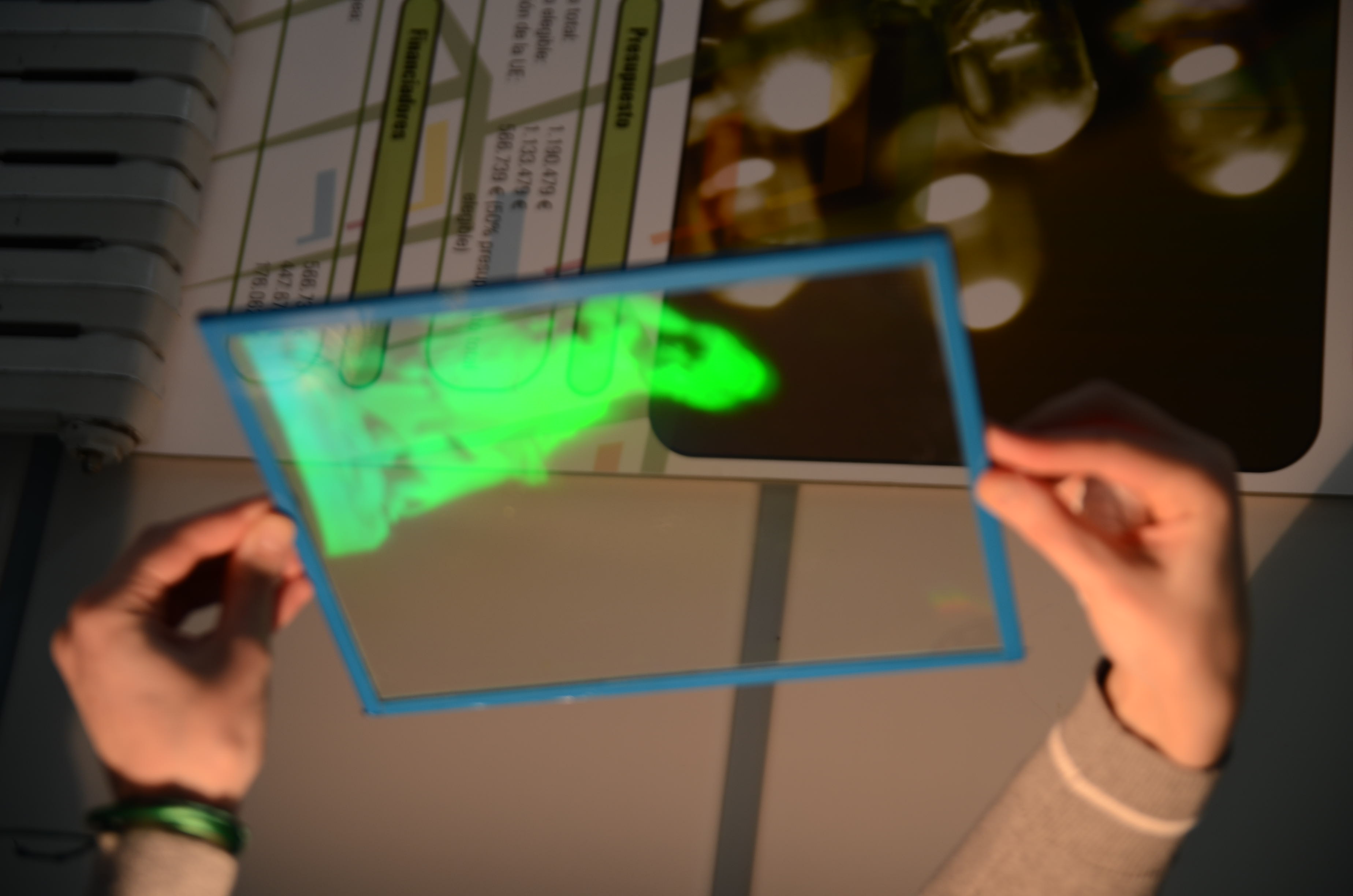
The new proposal was to make holograms in collaboration with one of our University labs. This activity has been done two times during the first semester: first with high capability students (17 in total) and a second one with students from 5th grade (which corresponds with students between 10 and 11 years old, 60 students in total). In combination with the old activities that we usually perform (Fiber optics, Interaction matter-radiation, Polarization, Visual Optics) we perform a new one related with Holograms. Therefore students came to our faculty and made 5 experiments separately.
Previous to the performance of the activity we produce a number of holograms to show it to the students so the main part of the budget was used to buy photographic material to print the hologram. No more material was needed because a holographic experiment is done during the physics grade and therefore we made ours only paying for the spare items so the laser, and optical material was in the lab.
After the fabrication of the holograms we show students how to make it and their properties. By simply using a lamp we show the recovery of the holograms and their characteristics. With this new idea we can explain some features of the interferometric behaviour of optical pulses, which is in fact one of the main points of the optics that we have not implemented yet in our Spreading optics activity.
Physics workshop in festival “Playground”
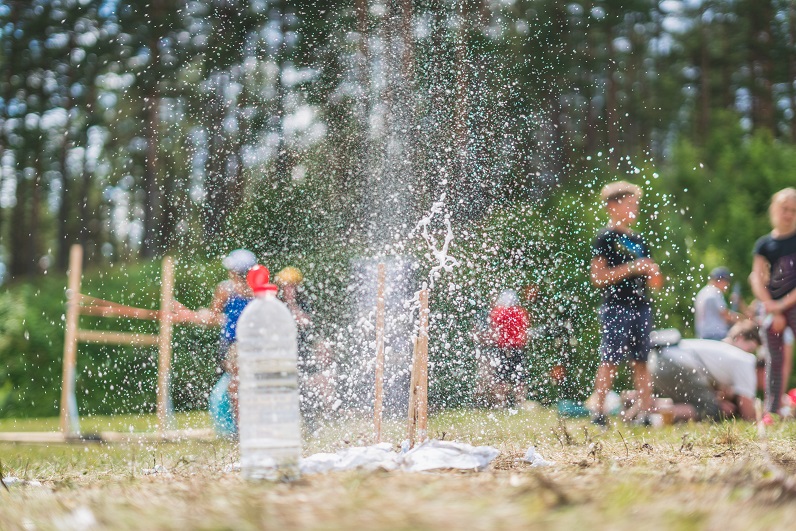
From July 8-10 the members of the University of Latvia Young Minds Section participated in a sports, music and creativity festival named “Playground”. The festival proved to be quite popular, garnering a turnout of a few thousand people. In the festival, our section operated a workshop in which attendants could take part in various physical demonstrations. The workshop attracted numerous people, young and old, most of whom had little day to day interaction with physics and science in general. Some were interested in the physical background of the experiments, while other were content with just witnessing the show.
Highlights of our demonstrations included:
- potato cannons and a catapult which people could use to shoot at pre-made targets;
- bottle rockets which could be launched in the air with pressure created by the release of CO2 from the reaction of baking soda with vinegar;
- a mixture of corn starch and water, which changes its apparent viscosity depending on the way it is handled;
- a demonstration with different color dyes that were placed inside glycerol, then slowly, carefully stirred until they seemed to have mixed. The dyes were then unmixed by stirring the liquid backwards;
- an electronic 1 vs 1 reaction game set up on a breadboard and operated by Raspberry Pi;
- the creation of dense mist by pouring water onto dry ice.
[nggallery id=99]
Students 4 Students 2016
One of the main goals of EPS Young Minds project is to connect young scientists among different physics fields, and therefore Prague section decided to organize students’ colloquiums named Physics Pizza Party: Students 4 students, where young scientists from our university presented their research activities. These events prove to be very successful in winter semester of academic year 2015/2016.
Totally, we organized four colloquiums this semester, with various themes: first colloquium was about more theoretical concept as a quantum entanglement, second about holograms, third colloquium give information about nuclear waste and storage methods of waste and the last colloquium presented modern methods of cancer treatment – cyberknife. All contributions were presented by Ph.D. and master students.
For most of invited speakers, it was their first experience to present their research activities in front of the the audience, which was not familiar with the topic. Despite of this fact, each talk was perfectly prepared, and therefore there was no problem to understand given topic. Each event was scheduled for about 60 minutes, but with discussion during and after presentation, average time of colloquiums was about 90 minutes and even more. According to the speakers it was very rewarding experience for them.
These events were advertised in form of posters, which were placed in school buildings. For the purpose of inviting as many participants as possible, we also advertised it on our social sites, namely Facebook and Twitter. Thanks to this advertisement, our students’ colloquiums were most visited. Average number of participants was around 20 students per one colloquium.
The Prague EPS Young Minds Section found these colloquiums rewarding, since this style of presentation “students for students” is still very rare in our country and we were one of the first, who organized this style of colloquiums. According to the feedback from our participants, we concluded, that our colloquiums were successful, since they were very positively rated by participants. Thanks to these positive feedback and high number of participants, we would like to continue with this activity.
[nggallery id=104]


![report_famelab_6[1]](http://www.epsyoungminds.org/wp-content/uploads/2018/04/report_famelab_61-300x200.jpg)
![report_famelab_5[1]](http://www.epsyoungminds.org/wp-content/uploads/2018/04/report_famelab_51-300x225.jpg)
![report_famelab_4[1]](http://www.epsyoungminds.org/wp-content/uploads/2018/04/report_famelab_41-225x300.jpg)
![report_famelab_3[1]](http://www.epsyoungminds.org/wp-content/uploads/2018/04/report_famelab_31-169x300.jpg)
![report_famelab_2[1]](http://www.epsyoungminds.org/wp-content/uploads/2018/04/report_famelab_21-225x300.jpg)